
Prostate brachytherapy, the use of “seeds” implanted inside the gland to administer doses of radiation to tissues affected by cancerous tumors, is typically categorized into low-dose-rate (LDR) and high-dose-rate (HDR) forms.1 A recent paper evaluates comparative dosimetric outcomes of the BioProtect Balloon Spacer and SpaceOAR gel spacer in patients being treated for prostate cancer with the LDR form of brachytherapy.
Entitled “Three-Arm Dosimetric Comparison of Rectal Spacing Techniques in LDR Prostate Brachytherapy” and authored by a team that includes corresponding author Tomer Charas, MD of Rambam Health Care Campus, the paper was presented in abstract at the American Brachytherapy Society 2026 Annual Meeting in Los Angeles.
Study Design
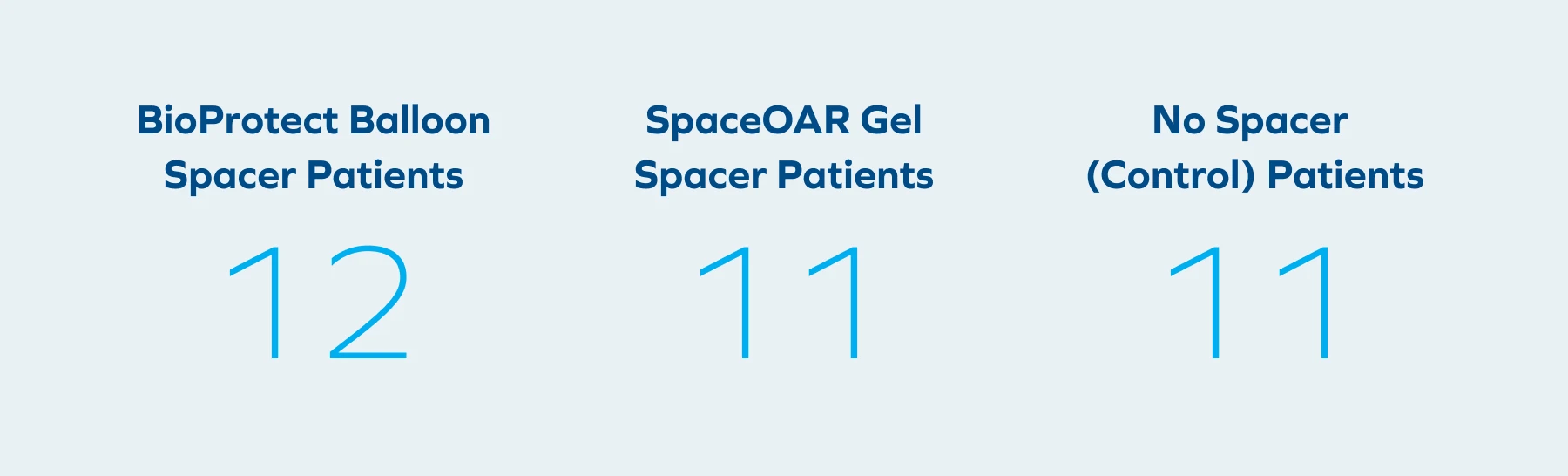
The study utilized a three-cohort retrospective methodology examining patients who underwent iodine-125 LDR brachytherapy. Pre- and post-implant rectal dosimetry measured V30, V50, and V70, as well as the dose to 1 cc of the rectal wall (D1CC), 2 cc of the rectal wall (D2CC), and the critical dose threshold. Results were reported preliminarily and are subject to change pending peer review.
The study found that the BioProtect Balloon Spacer cohort exhibited the largest reduction in mean critical dose of the three cohorts. The cohort receiving BioProtect also achieved the largest rectal dose sparing in all three volumetric endpoints (V30, V50, V70).
Critical Rectal Dose, Baseline to Day 30
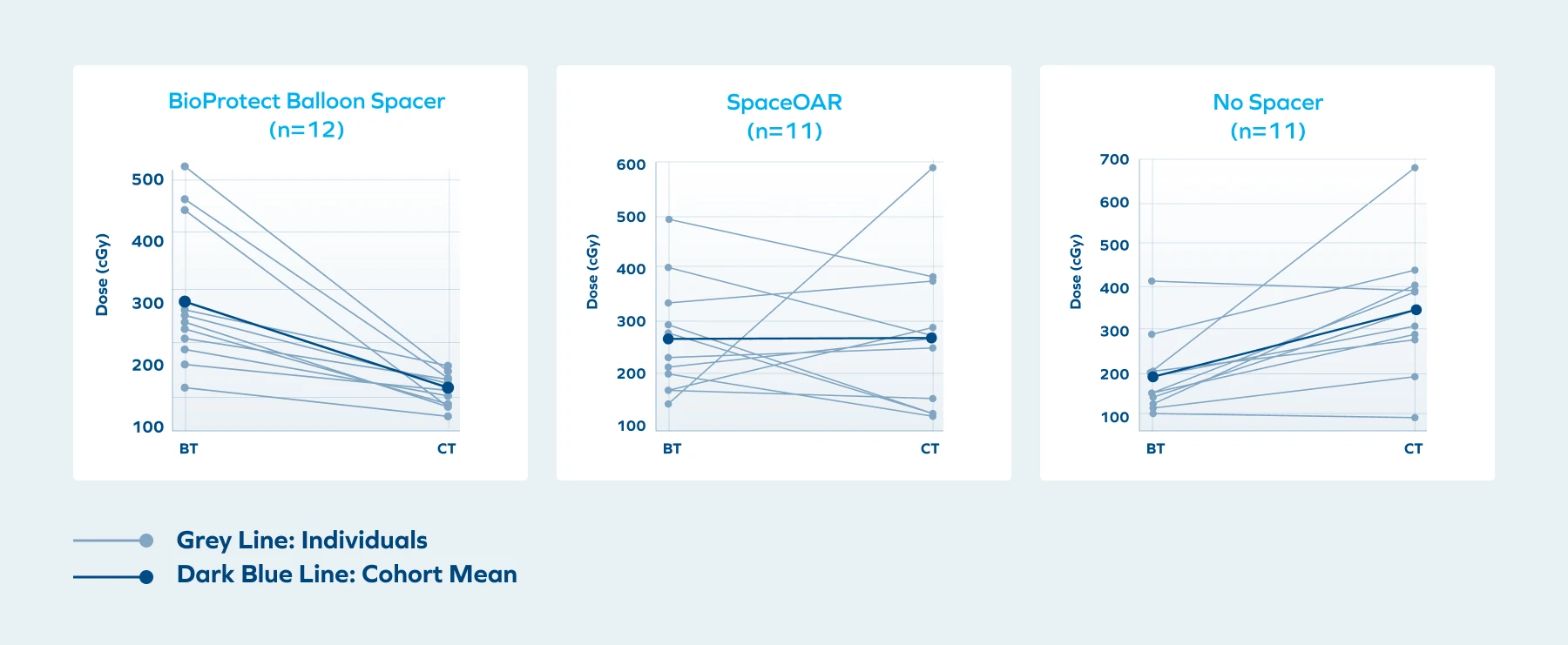
The cohort receiving SpaceOAR showed no significant change in mean critical rectal dose, while showing significant reductions in V30, V50, and V70. Significant differences in D1CC and D2CC rectal dose were also observed when spacers were used versus the no-spacer control group.
The study concluded that the BioProtect Balloon Spacer showed significant reductions in both max-dose and volumetric exposure reduction, while SpaceOAR showed significant improvement primarily in volumetric parameters.
These findings suggest that BioProtect may exhibit broader dosimetric effect in LDR brachytherapy than SpaceOAR, which is the most widely-studied perirectal spacer. Perirectal spacing also significantly reduced rectal radiation exposure in comparison with no spacer.
Interested in learning more about the BioProtect Balloon Spacer? Explore our Clinical Evidence page for additional information on spacing performance, dosimetry, and quality of life outcomes, and get in touch with a member of the BioProtect team for a product demonstration.
Reference
1. Mayo Clinic. “Brachytherapy.” Mayo Clinic website. Accessed June 10, 2026.